
ZooBC basics
ZooBC is a public blockchain with its own coin, ZBC. Its blocks are made every 15 seconds by registered nodes drawn by lot, a consensus called Proof of Participation, and its features, from tokens and markets to stored files and on-chain games, are built into the protocol as transaction types. This category explains what you need before anything else: the chain, its coin, accounts, wallets and networks.
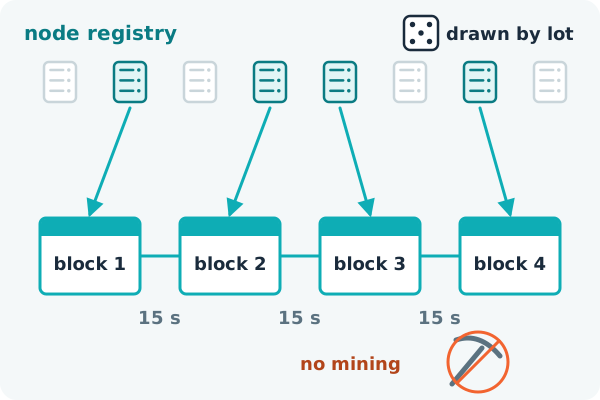
The chain
- What ZooBC is: what ZooBC is, what a node does, and why there is no mining and no virtual machine.
- Blocks and time: a block every 15 seconds, and durations counted in blocks.
- The genesis block: how a chain begins, and why its genesis hash is its identity.
- Devnet, testnet and mainnet: devnet, testnet and mainnet, three separate chains.
Coins and accounts
- The ZBC coin and its units: the ZBC coin, its 100,000,000 atomic units, and what it pays for.
- Accounts and addresses: the
ZBC_address, its checksum and its prefixes, and why every balance is public. - Getting a wallet and keeping it safe: the official wallet, the recovery phrase, and how to keep it safe.
Using and governing it
- What you can do on ZooBC: a map of the built-in features.
- The ZooBC Foundation: what the Foundation holds and publishes, and what no key can do.
- Glossary: short definitions of the terms used across this wiki.
Key numbers
| Item | Value (mainnet) |
|---|---|
| block interval | 15 seconds |
| one day | 5,760 blocks |
| 1 ZBC | 100,000,000 atomic units |
| supply ceiling | 33,333,333.33333333 ZBC |
| emission of new ZBC | over 15 years, fastest at the start |
| base action fee | 0.025 ZBC |
| account rent at the start | 0.01 ZBC per 30 days |
| genesis seats per chain | 11 |
| transaction type numbers | 73 |
Where to go next
How blocks are made, and who earns the new coins, is the subject of Proof of Participation. Operators continue with running a node, developers with transactions and integrations, and anyone curious about where fees and new coins go with economics and governance.
See also
Articles in this topic
- Accounts and addresses
How a ZooBC account is named: the 66-character ZBC_ address, what its 32 bytes are, how its checksum catches typos, and which prefixes and keyless addresses exist. - Blocks and time
A ZooBC block comes every 15 seconds, with or without transactions, and the protocol counts its durations in blocks: 5,760 blocks make a day. - Devnet, testnet and mainnet
ZooBC runs three separate chains: mainnet for real value, testnet with free coins and the same rules and values, and devnet with shorter timings for development. - Getting a wallet and keeping it safe
How to get the official ZooBC wallet, what the recovery phrase is, and the few habits that keep your coins safe. - Glossary
Short definitions of the terms used across the ZooBC wiki, in alphabetical order, each with a link to the article that explains it. - The genesis block
How a ZooBC chain begins: a configuration that is the starting state, committed in one hash that becomes the chain's identity. - The ZBC coin and its units
ZBC is ZooBC's native coin: eight decimals, counted on the chain in whole atomic units, used for fees, node stakes and rent, under a fixed supply ceiling. - The ZooBC Foundation
What the ZooBC Foundation does on the network: it holds the genesis seats and publishes the tools, while no key, its own included, can change rules or balances. - What you can do on ZooBC
A tour of the features built into ZooBC, from payments and tokens to markets, stored files, on-chain games and account groups, each one a transaction type. - What ZooBC is
ZooBC in one page: a public blockchain with its own coin, ZBC, where registered nodes drawn by lot make the blocks and every feature is a built-in transaction type.